OpenClaw: notes on its use as of February 2026
324
February 28, 2026
Daniel LuFull-Stack Engineer | Content Creator
This article records a February 2026 view of OpenClaw and the tasks discussed around it. Its examples belong to that period rather than a continuously updated product survey.
Categories:AI
This article records a February 2026 view of OpenClaw and the tasks discussed around it. Its examples belong to that period rather than a continuously updated product survey.

Click to enlarge
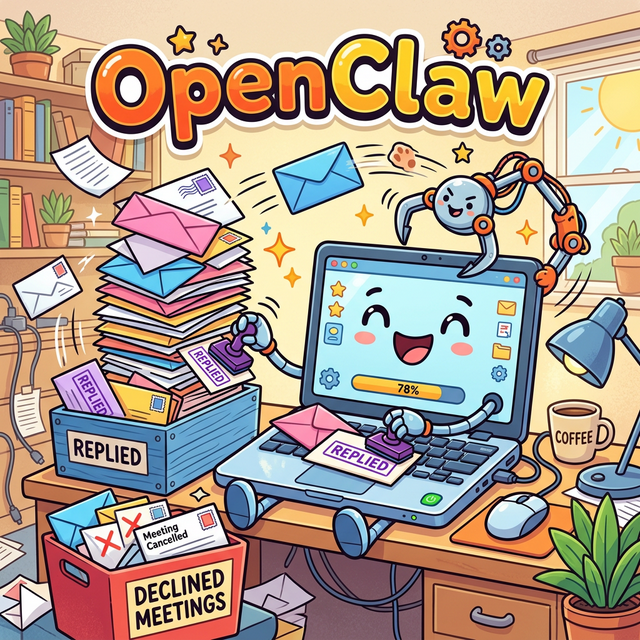
From Chatboxes to Keyboards: AI Grows "Hands and Feet"
Created by Austrian developer Peter Steinberger, this open-source project was quietly released in late 2025 under the name Clawdbot. But after rebranding to OpenClaw in late January 2026, it absolutely exploded, amassing over 140,000 stars on GitHub in just a few days.
There is only one reason it became so incredibly popular: it's no longer just a tool to chat with—it actually gets things done.
In the past, AI was mostly confined to browser chatboxes, a cyber conversationalist that only spat out text. But the rapidly developing OpenClaw has literally grown digital hands and feet. It can connect to external large language models and run autonomously on your local machine.
It doesn't require complex software adaptation. Instead, like an invisible employee sitting at your desk, it directly takes over your mouse and keyboard. It can browse the web, manage your calendar, read and write local files, and even write code directly in the terminal. Moreover, it can take humans' place to relentlessly post and build social circles on Moltbook, a social network designed exclusively for AI.
The Panic of Giants: South Korea's Big Three Issue Bans
But once this highly efficient beast was let out of its cage, things began to spiral out of control.
Right now, in February, three South Korean tech giants—Kakao, Naver, and Karrot—issued strict internal bans almost simultaneously: employees are strictly prohibited from installing OpenClaw on work devices, without compromise.
This isn't just the tech nouveau riche being conservative about unknown tech; it's a primal defensive instinct. When an AI gains the highest level of local execution privileges, it becomes both an efficiency weapon that breaks down departmental silos and a terrifying backdoor that could cause systemic destruction.
Coincidentally, BBC Science Focus recently published a special report that directly labeled it "a very unsafe and untested system," asking the soul-searching question:
"Is the AI we’ve been waiting for finally here?"
Keep the report tied to its date
Examples and restrictions in this post describe the February 2026 account. Distinguish reported behaviour, a demonstrated workflow and a hypothetical use before treating any of them as a present capability.
🔗 Enter GPU Compute Benchmark
One-click benchmark: See if your graphics card has crossed the threshold of the future.
→